
On accessing your stimming
Stimming is good for you.


Stimming, a repetitive self-soothing action, is one of the most stigmatised aspects of neurodivergence, especially autism. The stereotypical portrayals of stims, such as hand flapping and rocking, are stigmatised because they are the more visible and ostensibly socially non-conforming aspects of neurodivergence, and can even be associated with cognitive underdevelopment.
However, not only does stimming come in a wide range of forms, it is crucial for us to access. You might think you don’t stim - I certainly didn’t, probably owing to media portrayals of autism - but if you identify as autistic and/or ADHD, then you likely do but don’t necessarily realise that it is stimming. Some examples from Just Keep Stimming are below:
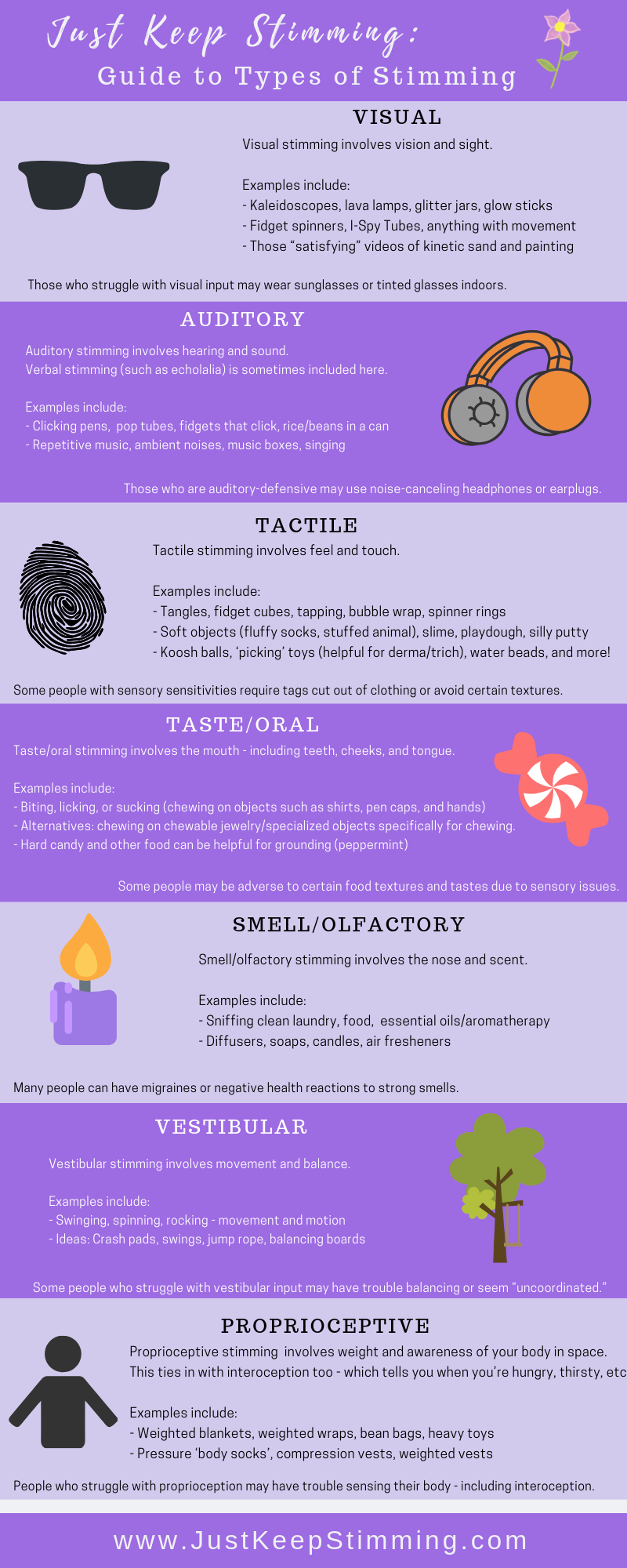
We can find ourselves stimming in different ways according to our emotional state, such as stress, boredom or happiness, but the outcome is the same: to calm and regulate our minds. This is important if you know you are in a situation which is overwhelming (in a good or bad way), are struggling to concentrate, or have energy you need to dispel. I’ve noticed that a lot of my stress stims are tactile, e.g. hair twirling, running my fingers over my nails, chewing my lip. When I’m happy and I want to get the energy out, I engage auditory and vestibular/tactile stims, i.e. I listen to my favourite music and dance or run to it. Similarly, when I’m trying to concentrate, I have certain types of music I listen to get me into a Flow state.
Stims are important for our mental health as they are a meditative practice. Similar to meditation, studies have shown that stims reduce activity in the amigdala, the brain area responsible for threat detection. To stop ourselves from stimming is a form of harmful masking, as we’re often doing it so that the neurotypicals around us don’t think we’re weird, stupid or childish. Well, no-one owns our feelings but us and unless we’re hurting anyone or being inappropriate somehow, stims are a perfectly valid form of mental health management.

We must always have immediate or easy access to a range of alternative stims to help us prepare for and manage our emotions in the face of an unforgiving world not designed for us. For example:
Keep a fidget toy or chewing gum/sweets in every bag or coat pocket you own for when you’re out and about.
Build a playlist of your favourite music that gets you into a Flow state.
Buy clothes that feel nice to touch or have a compression function, like socks.
Schedule in exercise as a non-negotiable calendar. This includes dancing around your living room to music.
Treat. Yo. Self to nice smelling things like candles for each room in your house.
Switch on your lava lamp before you go out so that you have something pleasing to look at when you get back.
The AuDHD community needs to take back stimming. It is central to our wellbeing and enables to operate in the world more effectively. We deserve happiness just as much as anyone else, so make sure you know the stims you need for your different emotional states and life situations, and embed them into your everyday life.